WENZHOU, ZHEJIANG, CHINA, March 2, 2026 /EINPresswire.com/ — Is your production line experiencing unexpected downtime due to component fatigue? Are your automation systems struggling to maintain the micron-level precision required by modern electronics manufacturing? Can your current hardware withstand the rigorous duty cycles of high-speed packaging environments? In the intricate world of industrial automation, the high-quality pneumatic cylinder serves as the vital muscle of mechanical systems. A pneumatic cylinder is a mechanical device that uses compressed air to produce linear or rotary motion, acting as the primary actuator in countless applications—from the delicate assembly of smartphones in the 3C industry to the heavy-duty lifting required in automotive manufacturing and the sterile environments of medical equipment production.
The Anatomy of Excellence: Inside a High-Performance Pneumatic Cylinder
To understand how a premium cylinder elevates production, one must look at the sophisticated engineering beneath the housing. A high-quality pneumatic cylinder is far more than a simple tube and piston; it is a symphony of precision-machined components designed to minimize energy loss. At its core, the cylinder barrel is typically crafted from high-strength aluminum alloy or stainless steel, with an internal surface honed to a mirror-like finish to reduce sliding friction. The piston rod, often made of hard-chrome plated steel, must exhibit exceptional straightness and surface hardness to prevent buckling under load.
The true differentiator, however, lies in the sealing technology and internal cushioning. Premium actuators utilize multi-lip seal designs that provide a perfect airtight barrier while maintaining a low coefficient of friction, preventing the “stick-slip” effect common in inferior models. Furthermore, adjustable pneumatic cushioning at both ends of the stroke absorbs kinetic energy, protecting the internal structure and the connected machinery from high-impact forces. This meticulous attention to internal geometry ensures that the actuator delivers smooth, repeatable linear force, even in the most demanding high-frequency environments.
Precision as a Prerequisite: The Core Demands of Modern Systems
For modern automated equipment, the requirements for a high-quality pneumatic cylinder have evolved beyond simple movement. Reliability, precision, and stability are no longer “added values” but fundamental necessities. In high-speed applications like food packaging or new energy battery assembly, a cylinder must perform millions of cycles with negligible variance in response time.
A lack of stability in an actuator can lead to catastrophic failures in delicate processes. For instance, in the 3C (Computer, Communication, and Consumer electronics) sector, even a slight oscillation in a cylinder’s rod can damage sensitive semiconductors. Therefore, high-quality execution components are the silent guardians of equipment efficiency. They ensure that the long-term running costs are kept low by reducing maintenance frequency and extending the overall lifespan of the machinery. This is where the engineering philosophy of leaders like Zhejiang FOYE Industrial Automation Co., Ltd. comes into play, focusing on the intersection of robust design and high-frequency performance.
Technical Foundations and Standardized Design
To achieve such high levels of performance, a pneumatic cylinder must be built upon rigorous industry standards. International standards like ISO 15552 or ISO 21287 provide a framework for dimensions and mounting, ensuring interchangeability across global systems. However, a truly high-quality cylinder exceeds these basic geometric requirements. It involves optimized internal cushioning to reduce impact forces and specialized surface treatments for the piston rods to minimize friction.
FOYE aligns its manufacturing practices with these international norms while incorporating proprietary refinements in internal tolerances. By adhering to strict standardized designs, they ensure that their actuators—ranging from the MGP series thin cylinders with guide rods to heavy-duty actuators—can be integrated into diverse industrial environments without compatibility issues. This commitment to standardization serves as the baseline upon which more advanced manufacturing techniques are applied.
Elevating Industry Benchmarks Through Integrated Excellence
The path to elevating industry standards is paved by a relentless commitment to integrating high-end technology with sophisticated operational management. It is not enough to simply produce a component; a market leader must redefine the expectations for consistency and performance across the entire product lifecycle. FOYE achieves this by bridging the gap between advanced Japanese and German component standards and localized manufacturing agility.
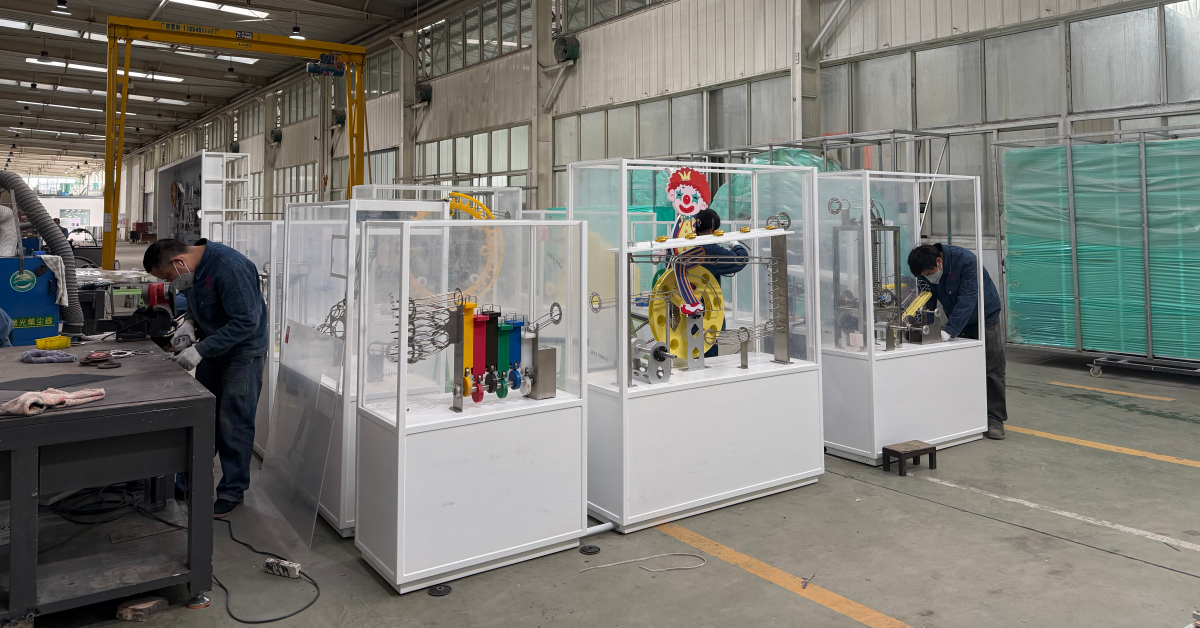
By deploying automated machining lines equipped with high-precision horizontal machining centers, the company ensures that every actuator meets a “premium-tier” specification that was once reserved for a few elite global brands. Furthermore, elevating standards means mastering the data behind the hardware. The implementation of real-time ERP and MES systems allows for a level of transparency and scheduling precision that maximizes production capacity without sacrificing the minute details of quality. This holistic approach—combining world-class equipment with rigorous digital oversight—ensures that the benchmark for “standard” pneumatic performance is constantly pushed higher, providing the market with a reliable, high-end alternative that stands the test of intensive industrial use.
Material Integrity and Comprehensive Quality Control
Quality is not only a result of how a product is made but also what it is made from. High-standard pneumatic components require core elements—such as seals, bearings, and specialized alloys—sourced from world-class suppliers. Utilizing components often found in premium Japanese and German brands ensures that the “heart” of the cylinder can withstand high pressures and thermal fluctuations.
The transition from raw material to finished product is governed by a rigorous quality architecture including SPC (Statistical Process Control), TPM (Total Productive Maintenance), and SOP (Standard Operating Procedures). This means that every cylinder undergoes multiple inspection gates. It isn’t just about a final test before shipping; it is about verifying the hardness of the rod, the integrity of the seal seat, and the smoothness of the bore at every step. This “process-centric” quality control philosophy is what allows FOYE to provide higher-standard solutions for demanding industries like medical equipment and automotive assembly.
From Standard Products to Applied Solutions
While standardized components solve most industrial needs, the complexity of modern automation often requires a more nuanced approach. The ability to provide customized solutions—whether it involves specialized stroke lengths, unique mounting configurations, or cylinders designed for extreme environments—is what distinguishes a manufacturer from a mere supplier.
Through technical support and a deep understanding of application scenarios, FOYE bridges the gap between a “catalog item” and a functional industrial solution. For example, their MGP series thin cylinders with guide rods are specifically engineered for applications requiring high lateral load resistance and non-rotation accuracy. By offering vertical integration of warehousing and logistics centers in South China and East China, the company also addresses the industry’s critical need for speed, ensuring that these technical solutions reach the factory floor precisely when needed.
Guidelines for Selecting High-Quality Pneumatic Actuators
When evaluating pneumatic cylinders for your next project, consider these key technical benchmarks:
1.Cycle Life and Seal Quality: Inquire about the source of the seals and the rated life cycle under full load. High-quality cylinders should offer millions of trouble-free cycles.
2.Machining Precision: Look for components produced on automated CNC lines, as these offer better bore-to-piston alignment, reducing internal wear.
3.Response Consistency: A high-quality actuator will have minimal “stiction” (static friction), leading to smooth movement even at low pressures.
4.Manufacturer’s Infrastructure: Ensure the supplier uses digital management tools like MES to guarantee batch consistency and on-time delivery
In conclusion, the evolution of industry standards is not the result of a single innovation, but the culmination of precision engineering, advanced manufacturing, and a commitment to quality. By focusing on these pillars, FOYE continues to elevate the benchmark for pneumatic execution, providing the reliability that the future of global automation demands.
For more information on high-precision pneumatic solutions, please visit: www.foyeauto-pc.com
ZHEJIANG FOYE AUTOMATION CO., LTD
ZHEJIANG FOYE AUTOMATION CO., LTD
+86 13588965028
info@foyeauto.com
Visit us on social media:
LinkedIn
Facebook
Legal Disclaimer:
EIN Presswire provides this news content “as is” without warranty of any kind. We do not accept any responsibility or liability
for the accuracy, content, images, videos, licenses, completeness, legality, or reliability of the information contained in this
article. If you have any complaints or copyright issues related to this article, kindly contact the author above.